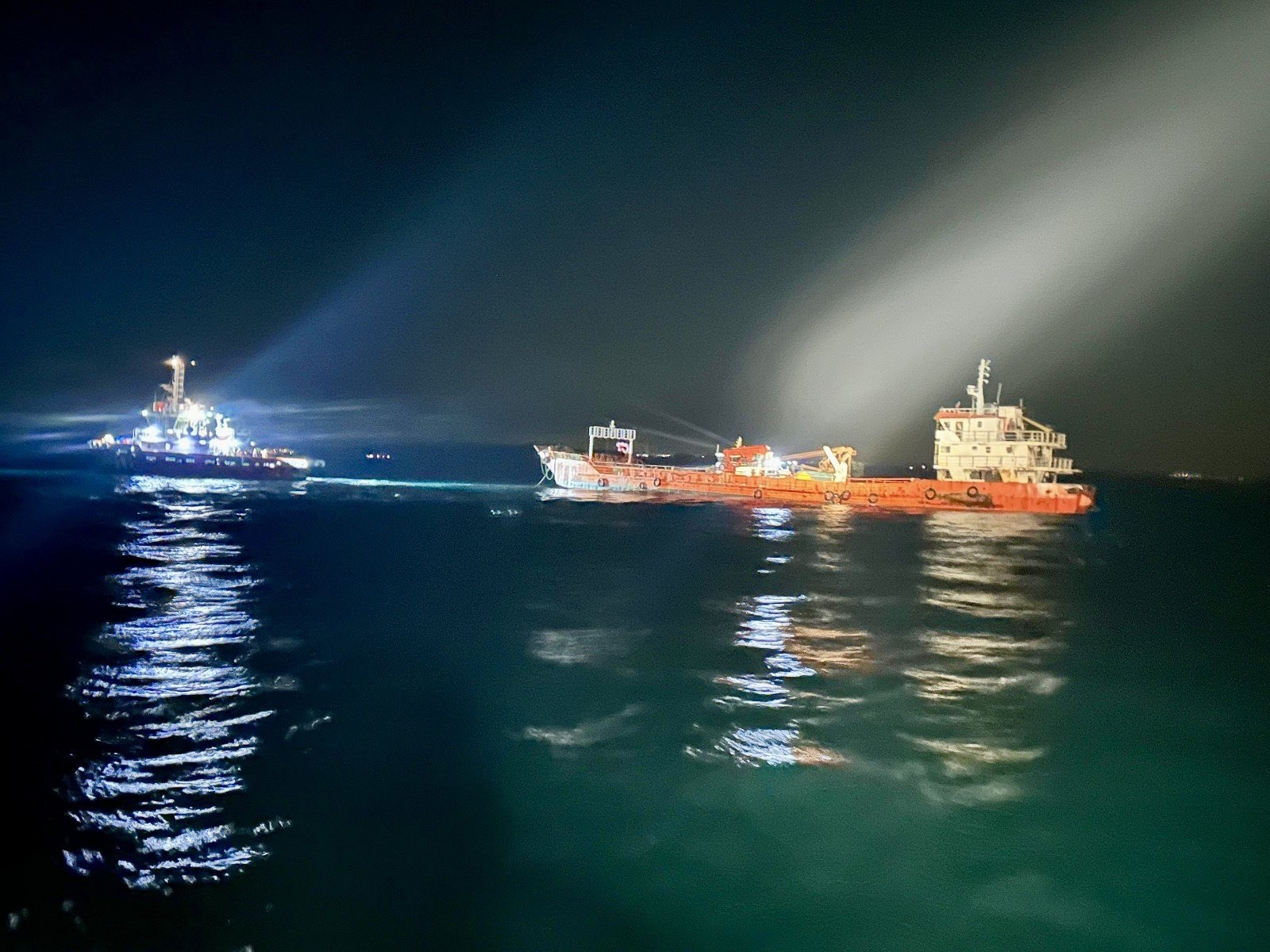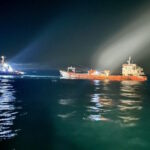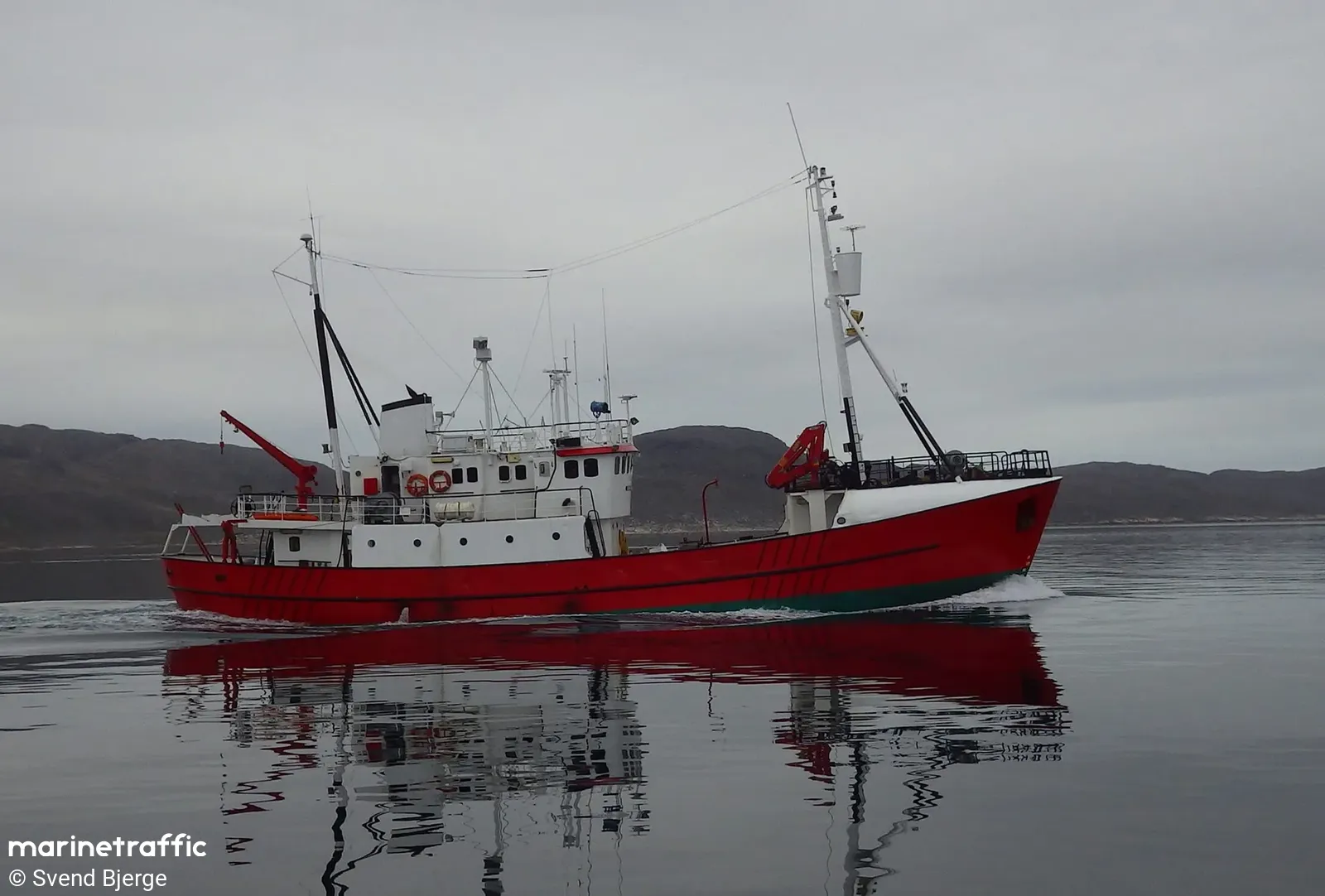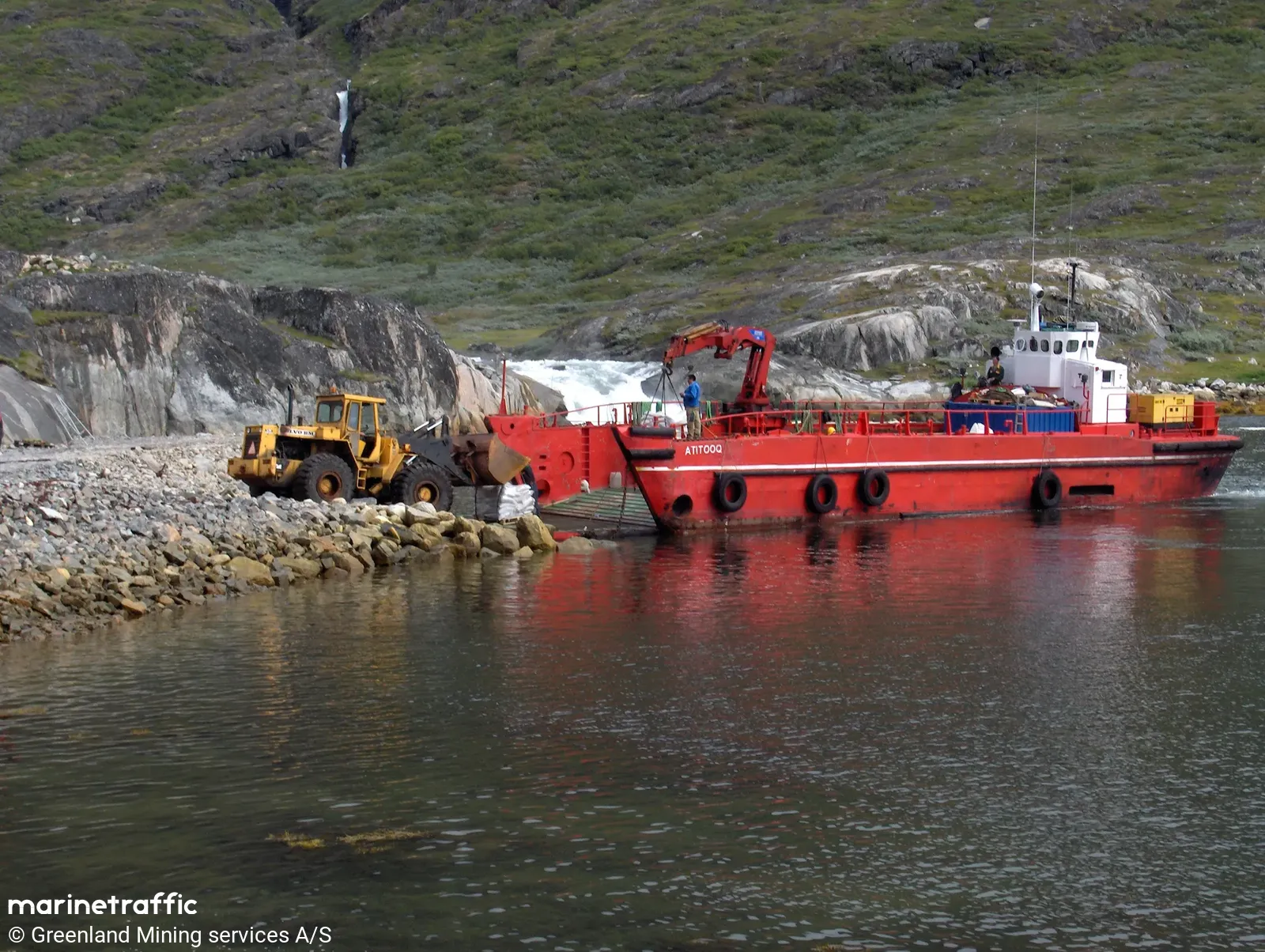
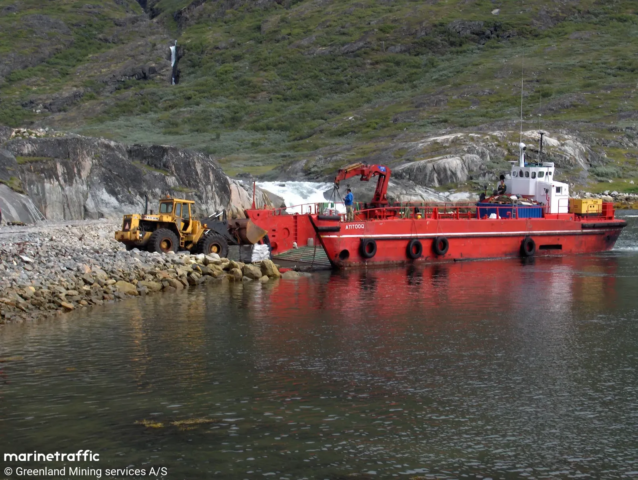
On September 18, the 30 meter long, 70 dwt passenger vessel Adolf Jensen (IMO: 6708575) ran aground at the mouth of the Tasermiut Fjord near Nanortalik, Greenland. The Adolf Jensen was enroute to Qaqortoq when it struck a reef. The vessel sustained hull damage and water ingress. A distress call was sent out with the Nanortalik fire brigade responding. Using the 27 meter long landing craft, Atitooq (MMSI: 331000149), the fire brigade transfer dewatering pump and pollution containment gear. Unfortunately, the pumps could not contain the flooding and the vessel sank after five hours later. All crew on the Adolf Jensen were safely evacuated to shore with no reports of injuries.
Authorities deployed floating booms to contain the oil pollution released. Unfortunately, the tides, current and wind made it impossible to contain the oil slick. Authorities don’t have an estimate on how much pollution was released from the Adolf Jensen. The oil slick suggests a fuel tank had ruptured or valves were not sealed before the vessel sank. Reports state the Adolf Jensen had some 20,000 litres of diesel along with 1,000 litres of gasoline on board when it sank.
Authorities have dispatched additional personnel to the scene to assist in cleanup efforts. The vessel owners have not release a statement on the incident.